Spoilers.
New York Times
The scenes in which Crawford swoops into Page’s and Bancroft’s lives with her request are beautifully written: They recognize the absurdity of the situation but also treat Crawford’s desperation with sympathy. The Ryan Murphy regular Sarah Paulson plays Page, who is stunned when Joan Crawford suddenly rings her up and makes her proposal. Page’s annoyed husband, Rip Torn (Cash Black), asks how Page could allow herself to be bossed around like that. Paulson picks up her nearby drink, overwhelmed by the sadness she sensed from Crawford coming through the phone, and says, “Well, she needs it.”
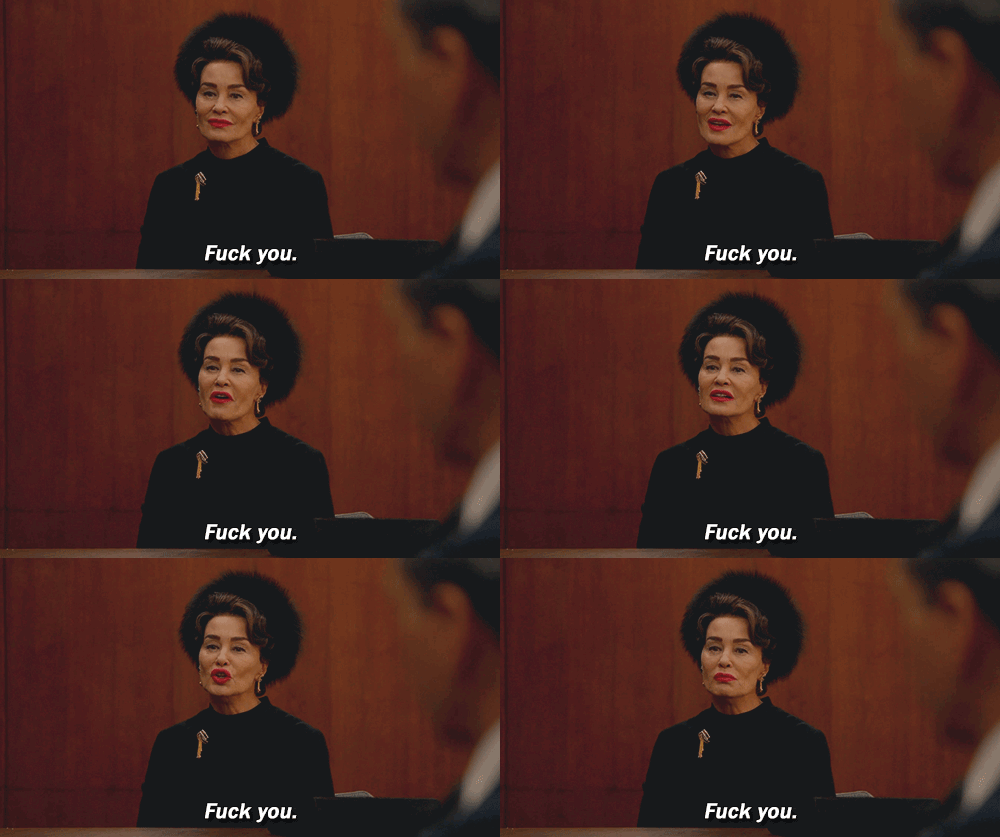
In the second scene, Bancroft (Serinda Swan) is shocked when Crawford enters her dressing room in the New York theater where she is appearing in “Mother Courage.” The scene ends in a similar way, with Bancroft’s interrupting Crawford’s passive-aggressive hints by asking if it would make Crawford happy to accept her Oscar. Lange, in her heartbreaking reaction, shows how unaccustomed Crawford was to generosity, especially from actresses. She is jolted at being “found out” like this, but also jolted by the clear sympathy in the younger actress’s face, sympathy that is not condescension but kindness. “Desperately,” Lange breathes, looking like a child, sitting on a dingy couch, staring up at the rising star. It’s one of Lange’s finest moments in the series.
And so, when she stalks onstage at the Oscars, it is with a renewed sense of her own stature. She’s a vision in silver. You could see her from a block away. Backstage, Davis watches her dream die, her body jolting as though a knife were plunged into her gut. Rage will come later. Sarandon has tapped into Davis’s ambition, drive, confidence. When she says to a reporter, “I want this,” you believe her. (Sarandon is no stranger to Oscar heartbreak. Nominated four times before winning for “Dead Man Walking,” she — and many others — were stunned when she wasn’t nominated for “Bull Durham.” Even Sarandon, who usually adopts a more maverick stance, made a couple of public comments betraying how hurt she was at the snub.)
F. Scott Fitzgerald wrote of Crawford in her younger days that she was “doubtless the best example of the flapper, the girl you see in smart night clubs, gowned to the apex of sophistication, toying iced glasses with a remote, faintly bitter expression, dancing deliciously, laughing a great deal, with wide, hurt eyes. Young things with a talent for living.” The words still reverberate, especially seeing Lange sweeping onto that stage, a moment that does what it is supposed to do: remind you of who Crawford was, the scope of her career, her pain, her craziness, her dogged refusal to “go gentle” into any night, good or otherwise. Lange makes us understand why. It’s about time.
https://mobile.nytimes.com/2017/04/02/arts/television/feud-bette-and-joan-and-the-winner-is-the-oscars-of-1963-recap.html?referer=https://www.google.com/






.jpg?format=auto&width=365)