

#1
Posted: 3/4/10 at 2:38pm
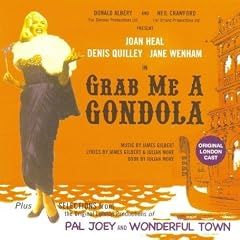
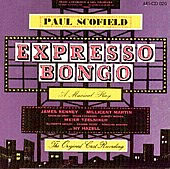
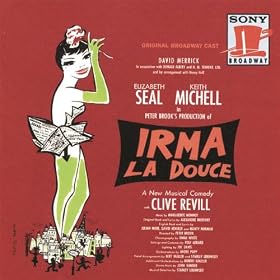
Although he wrote the book and lyrics for three of the biggest musical comedy successes of the 1950s 'Grab Me a Gondola', 'Expresso Bongo' and 'Irma La Douce' .Julian More, is a relatively forgotten name in British theatre.
His last West End success, written with the composer Monty Norman, was 'Songbook' at the Globe theatre in 1979.
This spoof tribute to a fictional songwriter, Moony Shapiro, was first performed by the Cambridge Theatre Company, with Bob Hoskins as Moony. The role had been written for Hoskins, but before the show found a West End home, he was offered his big film break in The Long Good Friday. David Healy replaced him in this revue-style rollercoaster account of success and failure.
The show was produced on a shoestring (the set cost 9,000 pounds, very little even in those days) and ran for six months. Shortly after it closed, too late to count at the box office,it won many major prizes including the Evening Standard award for best musical.

He wrote and performed with the legendary Cambridge Footlights, making his professional debut with 'Puss in Red Riding Breeches', a pantomime for adults, though not X-rated, at the Watergate theatre in 1954.
It was a golden time for theatre-bound Oxbridge graduates: Julian Slade wrote 'Salad Days' with Dorothy Reynolds in 1954, the same year that Sandy Wilson's 'The Boy Friend' opened in the West End. More's 'Grab Me a Gondola', with music by James Gilbert, opened at the Lyric two years later and ran for more than 600 performances, with Joan Heal giving a virtuoso performance as a Diana Dors-style film star at the Venice festival.
'Expresso Bongo',1958, opened at the now vanished Saville theatre, with a book by More and Wolf Mankowitz and lyrics by More and the composers Norman and David Heneker, starred Paul Scofield and Hy Hazell. The show was hailed as the first lowlife British musical since 'The Beggar's Opera', the lead character was played by Cliff Richard in the 1959 film and was based on Tommy Steele, the new pop idol of the Soho coffee bars.
'Irma La Douce', directed by Peter Brook, opened to rave reviews at the Lyric theatre in July 1958. More adapted the book from the French with Norman and Heneker, retaining the gutsy and affecting Parisian score of Marguerite Monnot (who had written songs for Edith Piaf) in the love story of a pure-at-heart prostitute (Elizabeth Seal) and an impoverished law student (Gary Raymond) in Pigalle, Paris. Billy Wilder's 1963 movie starring Shirley MacLaine dispensed with the songs. With the advent of pop culture, More's kind of musical theatre was rapidly rejected by audiences.
'The Art Of Living', a revue based writing of Art Buchwald, was no more a success at the Criterion in 1960 than was Peter Ustinov's operetta 'R Loves J', for which More wrote lyrics, at the Chichester Festival theatre in 1973 starring Topol.
'Songbook' hit the mark because it reflected poignantly on this upheaval in popular taste, but it failed to set New York alight in 1981.
'Roza', 1987, directed by Harold Prince and starring Georgia Brown as a humanitarian concentration camp survivor, a sort of one woman Unicef in Paris, was ushered from Broadway with similar lack of ceremony by the critics.
More's adaptation of Abe Burrow's book for the 1988 West End revival of Cole Porter's 'Can-Can' was counted another failure, despite the sparkling efforts of a cast led by Donna McKechnie, Milo O'Shea and Janie Dee.

His last West End success, written with the composer Monty Norman, was 'Songbook' at the Globe theatre in 1979.
This spoof tribute to a fictional songwriter, Moony Shapiro, was first performed by the Cambridge Theatre Company, with Bob Hoskins as Moony. The role had been written for Hoskins, but before the show found a West End home, he was offered his big film break in The Long Good Friday. David Healy replaced him in this revue-style rollercoaster account of success and failure.
The show was produced on a shoestring (the set cost 9,000 pounds, very little even in those days) and ran for six months. Shortly after it closed, too late to count at the box office,it won many major prizes including the Evening Standard award for best musical.
He wrote and performed with the legendary Cambridge Footlights, making his professional debut with 'Puss in Red Riding Breeches', a pantomime for adults, though not X-rated, at the Watergate theatre in 1954.
It was a golden time for theatre-bound Oxbridge graduates: Julian Slade wrote 'Salad Days' with Dorothy Reynolds in 1954, the same year that Sandy Wilson's 'The Boy Friend' opened in the West End. More's 'Grab Me a Gondola', with music by James Gilbert, opened at the Lyric two years later and ran for more than 600 performances, with Joan Heal giving a virtuoso performance as a Diana Dors-style film star at the Venice festival.
'Expresso Bongo',1958, opened at the now vanished Saville theatre, with a book by More and Wolf Mankowitz and lyrics by More and the composers Norman and David Heneker, starred Paul Scofield and Hy Hazell. The show was hailed as the first lowlife British musical since 'The Beggar's Opera', the lead character was played by Cliff Richard in the 1959 film and was based on Tommy Steele, the new pop idol of the Soho coffee bars.
'Irma La Douce', directed by Peter Brook, opened to rave reviews at the Lyric theatre in July 1958. More adapted the book from the French with Norman and Heneker, retaining the gutsy and affecting Parisian score of Marguerite Monnot (who had written songs for Edith Piaf) in the love story of a pure-at-heart prostitute (Elizabeth Seal) and an impoverished law student (Gary Raymond) in Pigalle, Paris. Billy Wilder's 1963 movie starring Shirley MacLaine dispensed with the songs. With the advent of pop culture, More's kind of musical theatre was rapidly rejected by audiences.
'The Art Of Living', a revue based writing of Art Buchwald, was no more a success at the Criterion in 1960 than was Peter Ustinov's operetta 'R Loves J', for which More wrote lyrics, at the Chichester Festival theatre in 1973 starring Topol.
'Songbook' hit the mark because it reflected poignantly on this upheaval in popular taste, but it failed to set New York alight in 1981.
'Roza', 1987, directed by Harold Prince and starring Georgia Brown as a humanitarian concentration camp survivor, a sort of one woman Unicef in Paris, was ushered from Broadway with similar lack of ceremony by the critics.
More's adaptation of Abe Burrow's book for the 1988 West End revival of Cole Porter's 'Can-Can' was counted another failure, despite the sparkling efforts of a cast led by Donna McKechnie, Milo O'Shea and Janie Dee.
Updated On: 3/4/10 at 02:38 PM