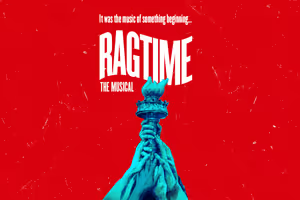
The show is about people who have no sense of history or consequence for their actions, and people who are very much aware of both. The boy symbolizes an awareness of the relationship between events occuring at the turn of the century and the coming world war that will forever change life in the U.S. Those events include:
1) the shooting of Stanford White by Harry Thaw over Evelyn Nesbit, which is the first 'bang, bang' act of passion. World War I will be characterized by similarly violent acts of passion, beginning with the assassinations of Ferdinand and Sophie.
2) Harry Houdini's interest in modern technology (especially technology that allows the miracles of flight, disappearance and escape) and foresight to prevent tragedy. People waging the war and the modernists who have to deal with its psychological impact afterward wil be concerned with technology and foresight too.
3) the villification of Coalhouse for an act of passion that really isn't any less legitimate than the same act committed by Harry Thaw over Evelyn Nesbit (both of whom profit from their acts of passion). The war that the Little Boy foresees will be waged on similar we-them terms with strong racial overtones. Emma Goldman and Tateh are already engaging in a dialogue on this. Additionally, the war will involve a great deal of spectacle - which, judging by the press Nesbit, Houdini and Walker receive - already fascinates the public.
Bottom Line: There are numerous connections between the war and the events occurring within the ragtime era, and the little boy recognizes them more than any other character. Modernists of the 1920s (ESPECIALLY Virginia Woolf) were deeply concerned about the impact that World War I had on the human psyche and the signs of the war in "quainter" times. As a postmodernist, EL Doctorow perpetuated this same concern but revised it by (to put it bluntly) broadening the concerned subjects beyond the Anglo-Saxons with which Woolf was so enamored.
Updated On: 7/29/05 at 12:28 AM