Jaystarr's Special Photo Thread : THE COLONIAL & PANTAGES — Page 2
Posted: 11/1/07 at 9:00pm
I look forward to your Seafarer review, that one is definitely on my list for the fall.
Posted: 11/1/07 at 9:17pm
If you ever get to Philadelphia's Forrest Theatre, please take pictures there--it is beautiful, although not as ornate as the Colonial. I saw Barbara Cook in PLAIN & FANCY at the Forrest back in 1955.
I noticed the light bridge in your photo taken from the 2nd Balcony that is similar to the light bridge at NYC's Shubert Theatre. The light bridge at the Shubert blocks the view of the murals on the ceiling there, as it somewhat does at the Colonial. I'm not sure, but I think the light bridge at the Shubert was installed just prior to A CHORUS LINE's opening. The Shubert has no lobby to speak of, but the auditorium is one of the most beautiful in NYC, IMO.
Posted: 11/1/07 at 9:20pm
Posted: 11/1/07 at 9:25pm

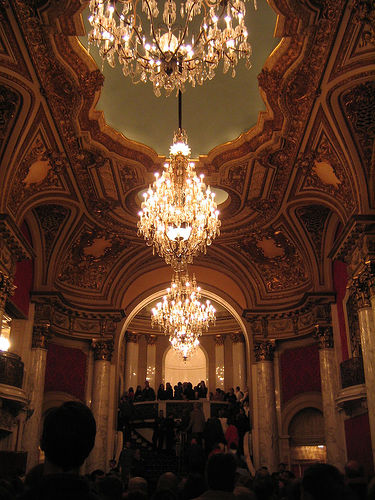
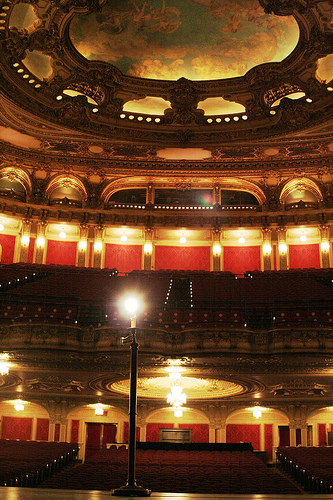
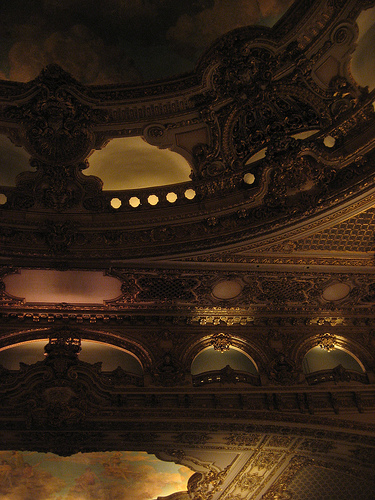
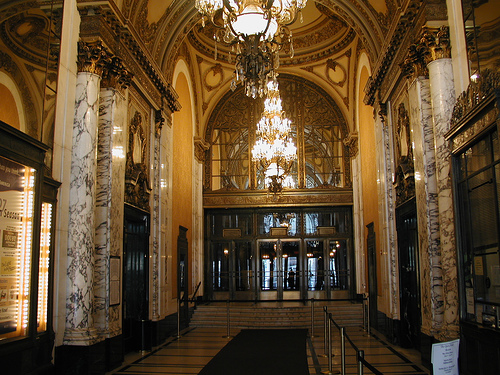
These are from my phone, so they're pretty low-res, but I had to pay some sort of tribute to this beautiful theatre. If only Broadway in Boston, ahem, Broadway Across America - Boston, would wise up and book more shows into Boston, maybe more people would see how beautiful our theatres are.
Posted: 11/1/07 at 9:26pm

And one of the chandelier...
Posted: 11/1/07 at 9:32pm
Hachet-Face- If it tour - I doubt if they would use the false-arch proscenium bec. the arch proscenium at the Colonial is very prominent.
Gypsy9-
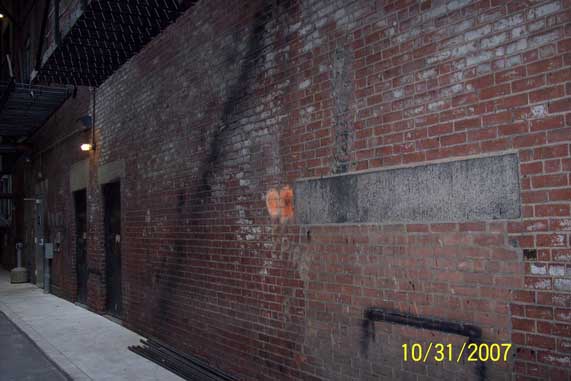
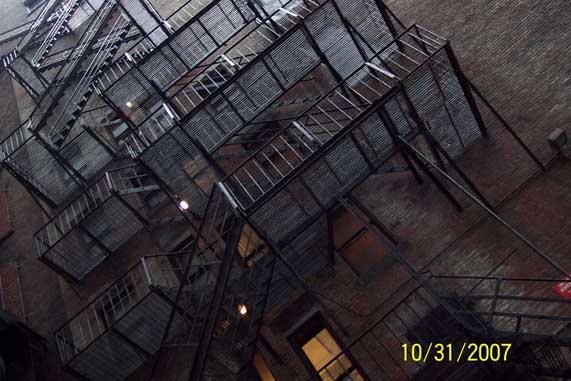
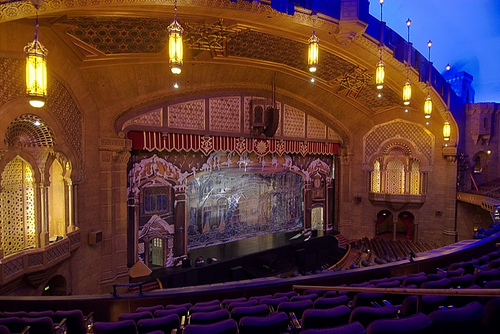
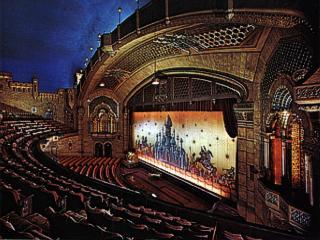
the real Colonial Theater
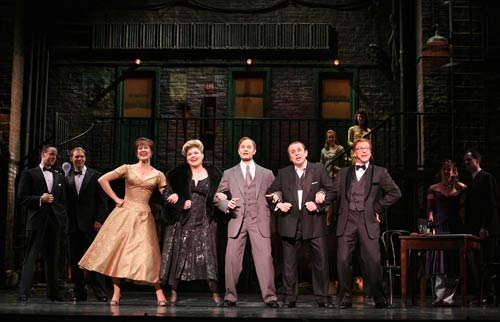
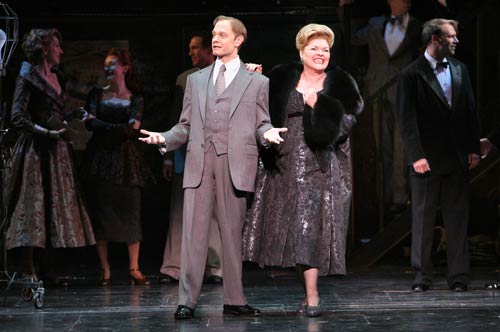
Curtains' Colonial Theater
We’re a special kind of people known as show people
We live in a world of our own
Our days are tied to curtains
They rise and they fall
We’re born every night
At half-hour call
More on "Curtains" the Musical by John Kander & Fredd Ebb
https://www.curtainsthemusical.com/home.php
Updated On: 11/1/07 at 09:32 PM
Posted: 11/1/07 at 11:08pm
Posted: 11/2/07 at 12:58am
Posted: 11/2/07 at 11:29am
To all my fellow theater lovers.....
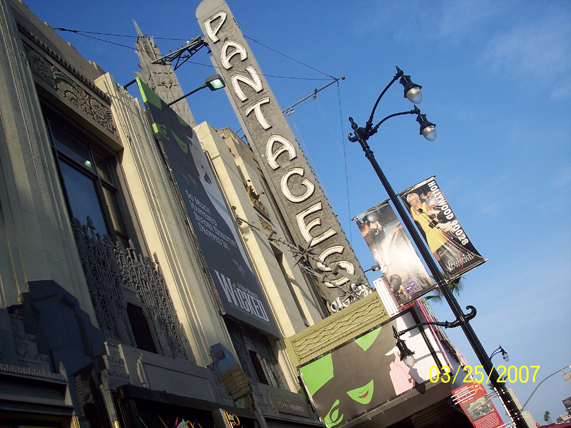
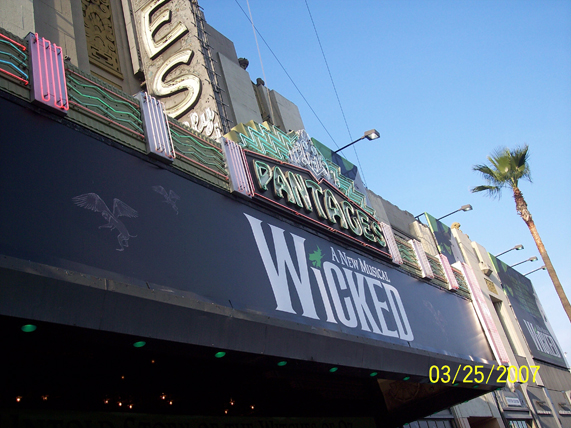
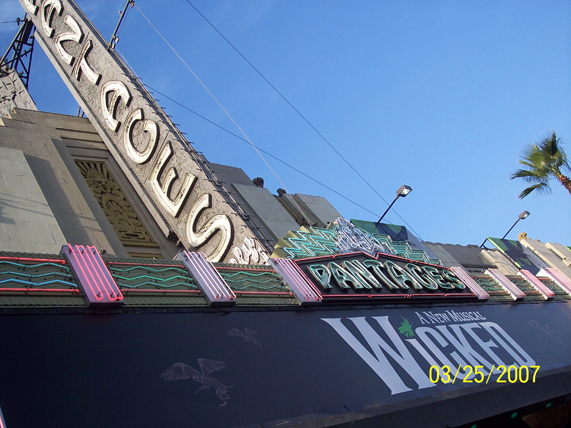
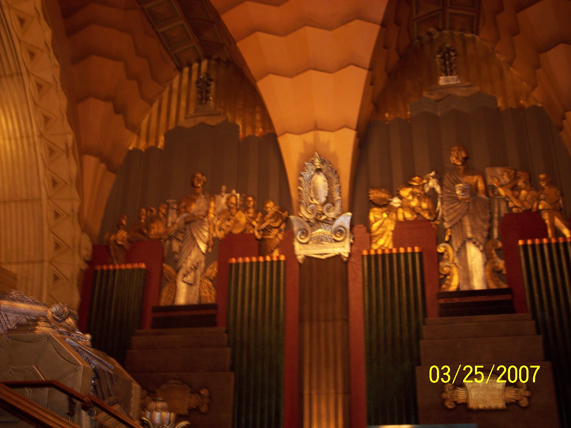
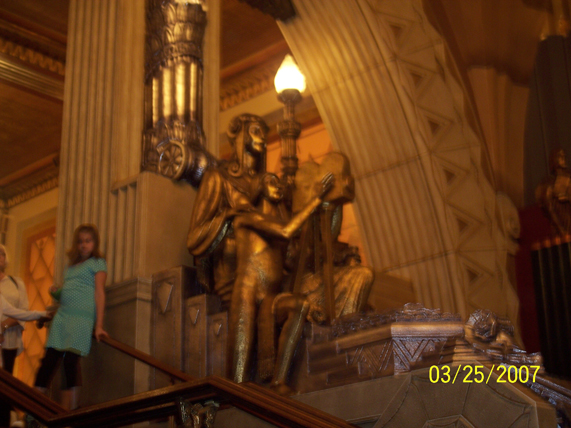
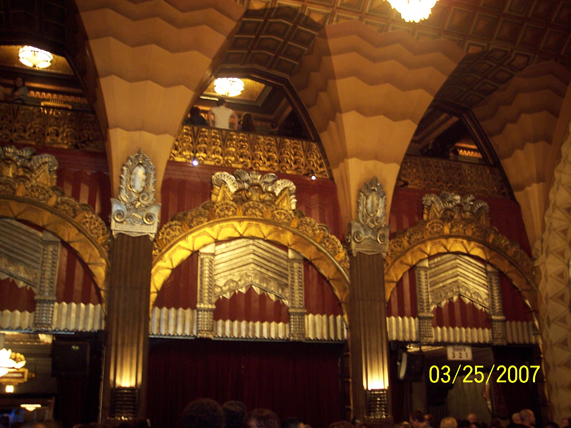
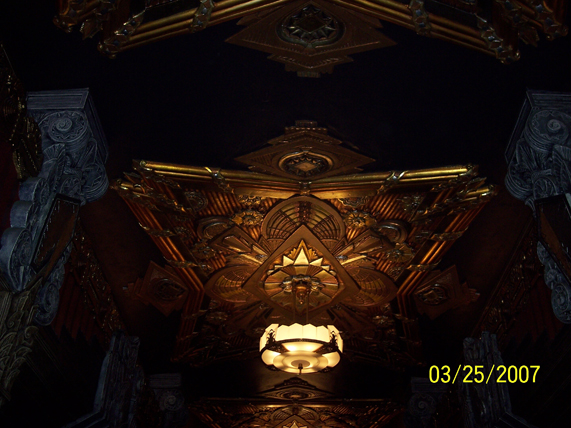
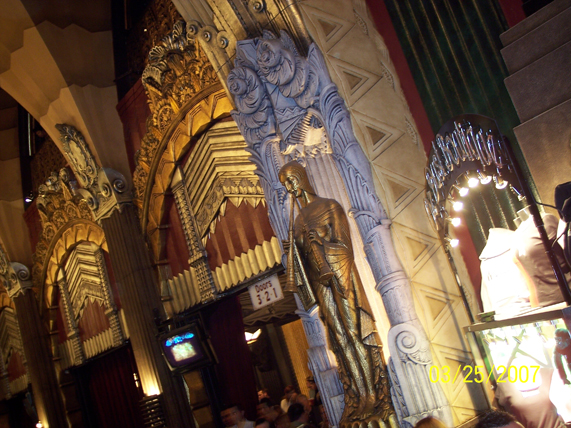
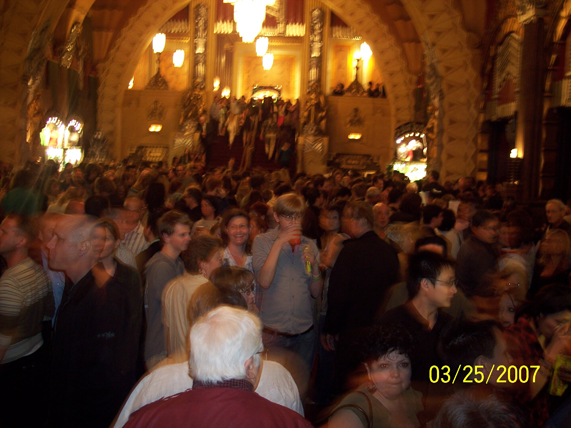
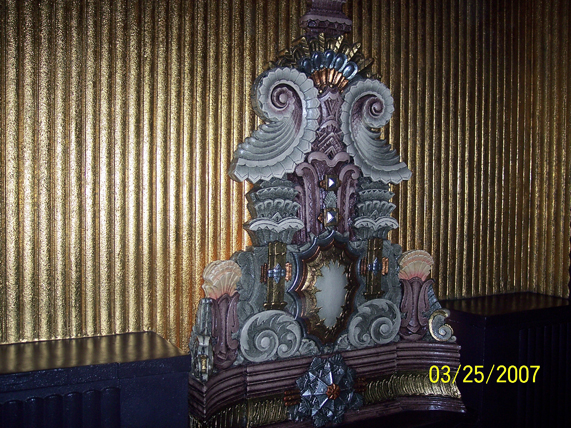
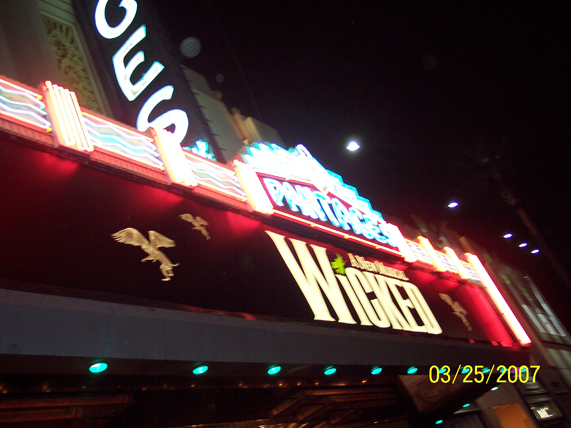
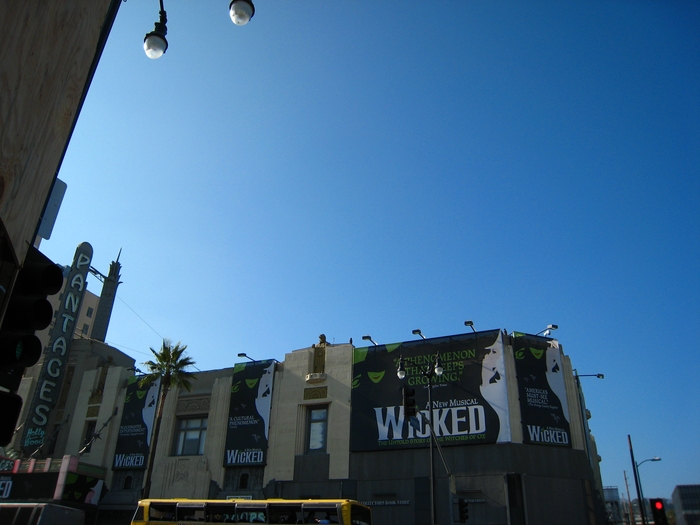
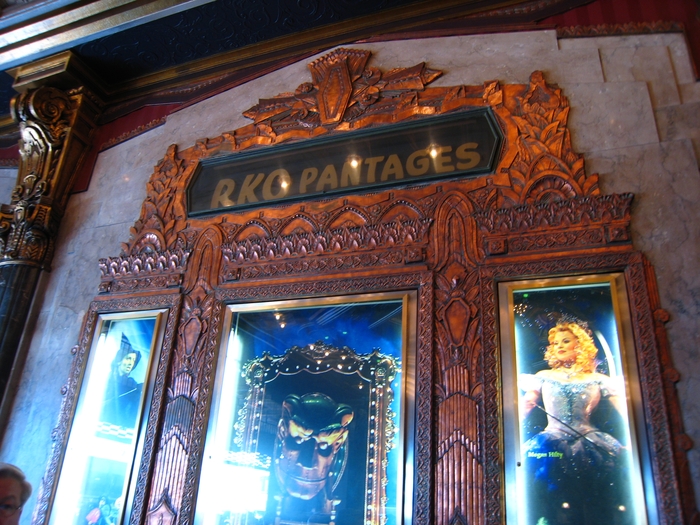
The Pantages Theater
6233 Hollywood Blvd
Los Angeles, California
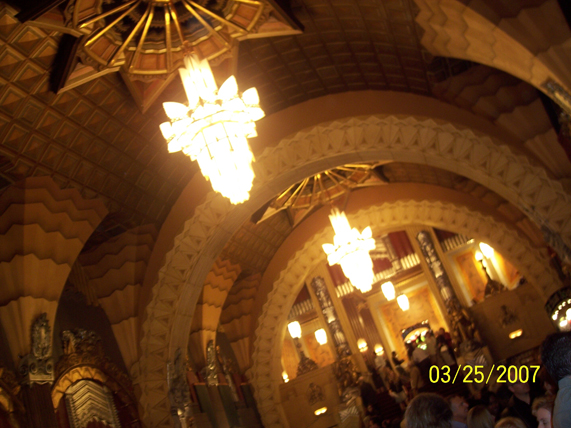
The Pantages Theatre, formerly known as RKO Pantages Theatre, is located at 6233 Hollywood Boulevard, Hollywood, California in the United States of America. Designed by architect B. Marcus Priteca, it was the last theatre built for the impresario Alexander Pantages. The palatial Art Deco theatre opened on June 4th, 1930, as part of the Fox Theatre chain.
The Pantages Theatre Circuit had been built on Vaudeville, and the new Hollywood theatre programmed first-run movies alternating through the day with Vaudeville acts for its first two years. But like other theatres during the Great Depression, it was forced to economize and thereafter operated primarily as a movie theatre, though live entertainment was presented occasionally.
In 1949, The Pantages came under the ownership of Howard Hughes's RKO Theatre Circuit. From 1950 through 1960, the theatre hosted the American motion picture industry's annual Academy Award Ceremonies. It continued to be a major venue for Road show movies into the 1970s. From 1965, it was operated by Pacific Theatres. The Pantages closed as a movie theatre in January, 1977, and re-opened the following month with Bubbling Brown Sugar, the first of the many stage productions that have since become its regular fare.
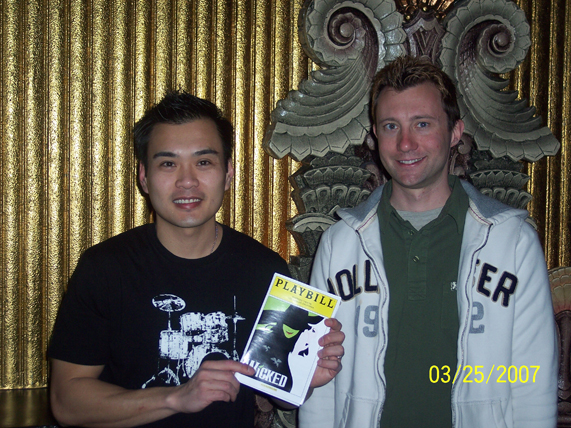
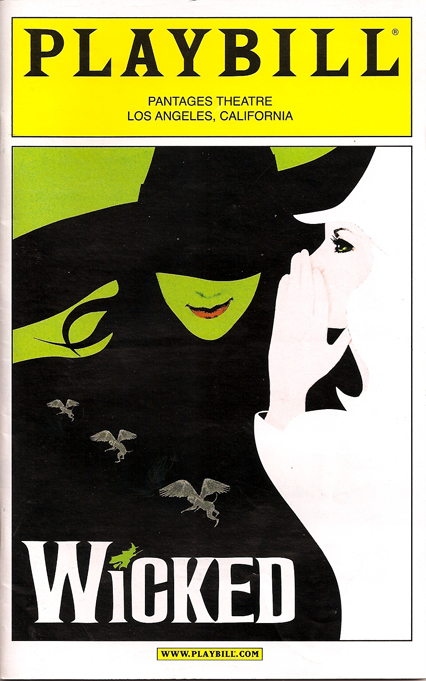
Now operated by an arm of the Nederlander Organization, the Pantages is one of Los Angeles' leading homes of legitimate theatre (the five highest-grossing weeks in L.A.'s theatrical history were all shows at the Pantages) and a favorite "location" for TV shows, movies and music videos. The Pantages Theatre shows a diverse range of large scale production musicals such as Disney's Lion King, which ran at the theatre for over two years, and currently hosts the Los Angeles production of the Broadway musical Wicked. (from Wikipedia)
More info on "Wicked" at the Pantages Theater:
https://www.broadwayla.org/production/theatre.info.asp?ID=1
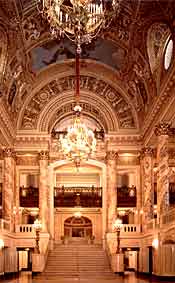
Other Photos:
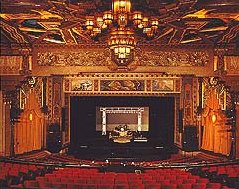
Pantages' stage
Updated On: 1/8/08 at 11:29 AM
Posted: 11/2/07 at 1:12pm
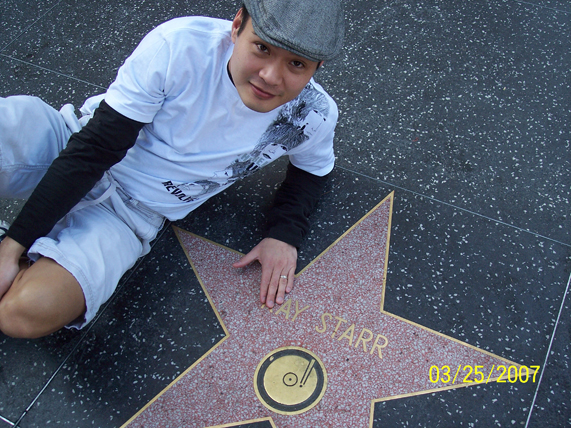
You deserve your own star for presenting all of your great photos. Thanks, again.
Updated On: 11/2/07 at 01:12 PM
Posted: 11/2/07 at 3:56pm
*******
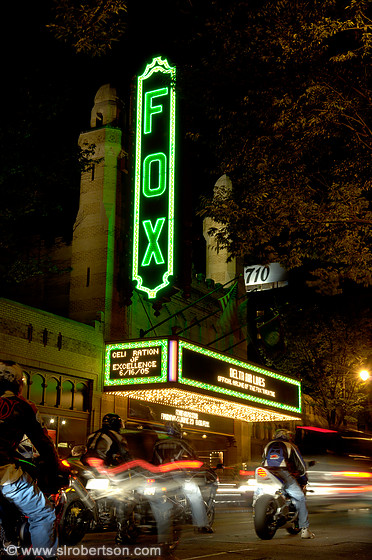
I just got a ticket to a show at the Fabulous Fox Theater in Atlanta, and guess ..what show is it ? CATS !
Well , its $20.00 and I am happy to pay that to see the Fabulous Fox Theater (btw- that's the complete name of the theater per ticketmaster) and I am going to post my photos on The Fabulous Fox Theater in January after I came back from my Atlanta Trip ( I am going to visit the High Museum too bec. I heard there's some art works on loan from the Louvre Museum)- very excited for my trip and I am going on MLK weekend !
I probabbly post two more beautiful theaters from Boston.
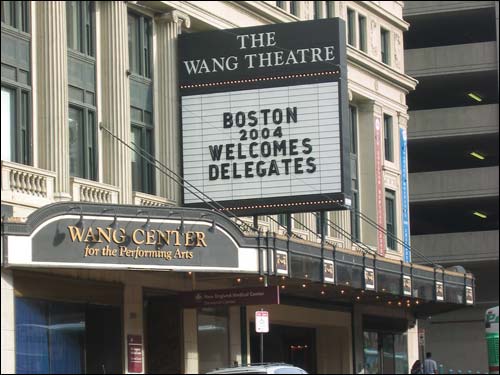
1. The Wang Center for the Performing Arts (its callled Citigroup now- I hate when they do that!
Edit : French Renaissance, not Italian Renaissance
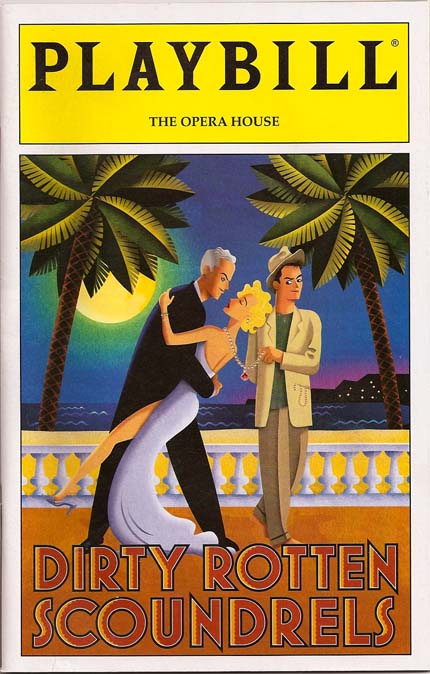
2. The Opera House it looks like a jewelry box. Actually they are playing Wicked here and unfortunately I cannot see Wicked anymore. I have seen the Original Broadway Cast and the Los Angeles Cast ... I cant do the Touring .. Too much for me already
So here's my posting schedules:
Special Photo Thread on Beautiful & Historic Theaters Series
1. The Wang Center (Boston) -by December ("White Christmas")
2. The Fabulous Fox Theater (Atlanta )- by January ("Cats")
3. The Opera House (Boston)- by February (My Fair Lady)
Hope you guys like it
J*
Updated On: 11/2/07 at 03:56 PM
Posted: 11/2/07 at 4:15pm
1658
The internet search ive just done shows the Colonial having acapacity of 1658. This obviously changes with each show due to orchestra requirments etc. x
Updated On: 11/2/07 at 04:15 PM
Posted: 11/2/07 at 4:40pm
of 1,658
*********
Additional info on : The Wang Center for the Performancing Arts (per Cinema treasure website) the architectural design is indeed ..Renaissance
Edit : not Italian Renaissance but French Renaissance
The Wang Theatre (formerly the Metropolitan Theatre), along with the Shubert Theatre, the two theatres operated by the non-profit Wang Center for the Performing Arts has been converted into a grandiose performing arts center that, until spring of 2005, delighted movie audiences with ocasional showings of classic films.
A theater whose beauty is really the 'big' thing, the Wang Theatre has state-of-the-art sound technology along with beautiful decorations and gold plated figures. It also features a large stage, with a 1500 seat balcony, a mezzanine, and 20 box seats along its edge.
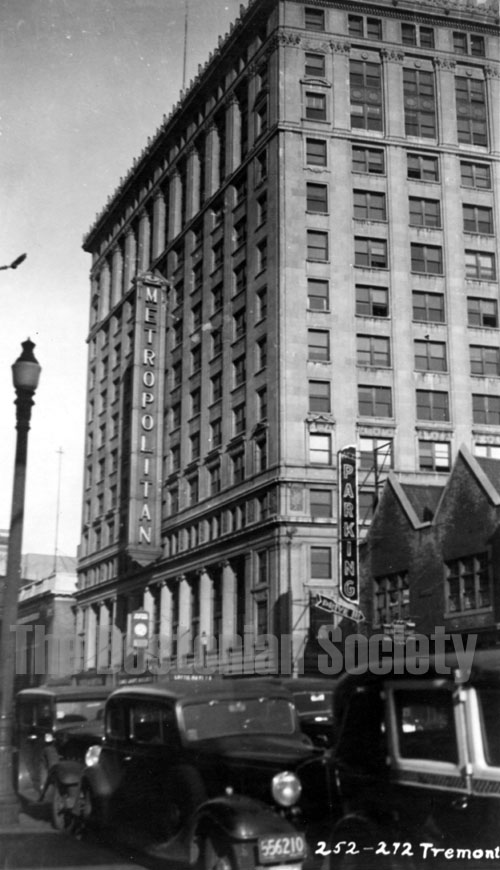
The Wang Center, originally the Metropolitan and built in 1925, combines a 14-story Renaissance Revival office building of granite and cast stone, with an auditorium seating 4225 people. C.H. Blackall was the architect. The interior is characterized by a series of vestibules and lobbies, highly decorated in marble, bronze, ornate gilding, and painted friezes.
The initial developer of the Metropolitan was Boston movie mogul Nathan Gordon. The cost was over $8,000,000. The theatre employed a corps de ballet, a 100-voice chorus, and a 55-piece orchestra. There was also a 3100-pipe organ. Along with the stage shows, the musicians and dancers presented tableaux, ballet, and operatic moments. Admission cost 35 to 75 cents. To amuse people waiting to be seated, there were musicians playing in the Grand Lobby, paintings by area artists hung on the walls, and ping pong and billiards downstairs. After the show, couples danced in the Grand Lounge, and in 1932 a small Art Deco restaurant called the Platinum Salon opened in the lounge area.
Added to the National Register of Historic Places in 1980
Metropolitan Theatre (the Wang Center)*** (added 1980 - Building - #80000445)
Also known as Music Hall
252-272 Tremont St., Boston
Historic Significance: Architecture/Engineering, Event
Architect, builder, or engineer: Blackall,Clapp & Whittemore, Multiple
Architectural Style: Renaissance
Area of Significance: Performing Arts, Architecture
Period of Significance: 1900-1924, 1925-1949
Owner: Private
Historic Function: Commerce/Trade, Recreation And Culture
Historic Sub-function: Business, Specialty Store, Theater
Current Function: Commerce/Trade, Recreation And Culture
Current Sub-function: Professional, Specialty Store, Theater
https://cinematreasures.org/theater/29/
Photos from Cinema Treasures
Wang 2004
Wang (Metropolitan) 1947
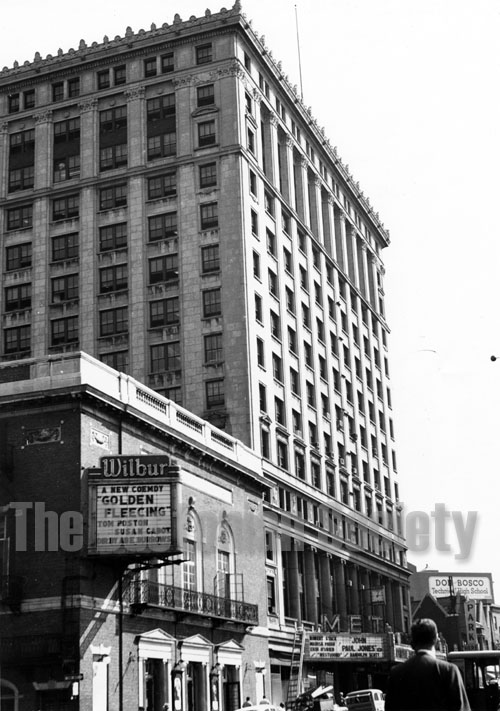
Wang 1959- (you can even see The Wilbur Theater next to it )
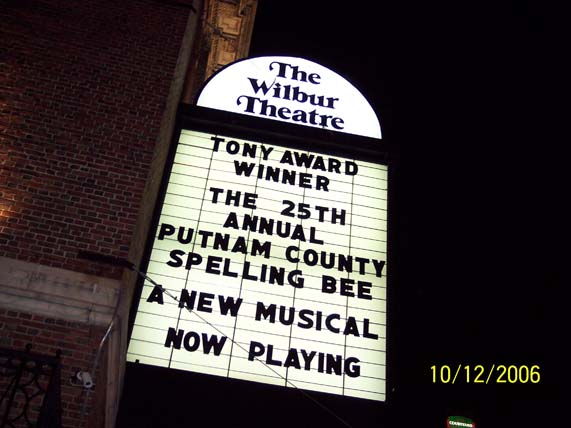
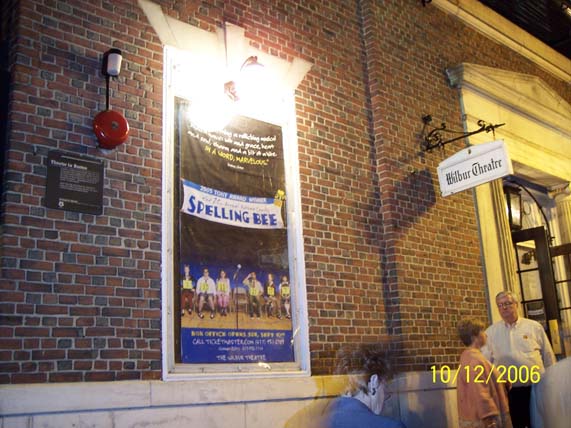
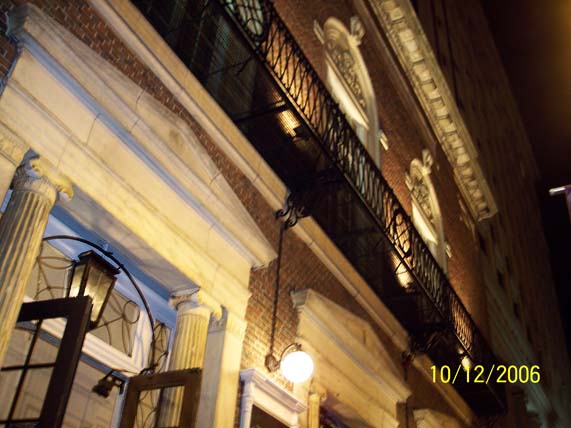
This is the Wilbur Theater now...
Updated On: 11/2/07 at 04:40 PM
Posted: 11/2/07 at 5:19pm
BTW : Interesting article about the Wilbur Theater
http://www.boston.com/news/globe/editorial_opinion/oped/articles/2007/09/21/keep_the_wilbur_alive/
Keep the Wilbur Alive
by Ed Siegel
Boston Globe
September 21, 2007
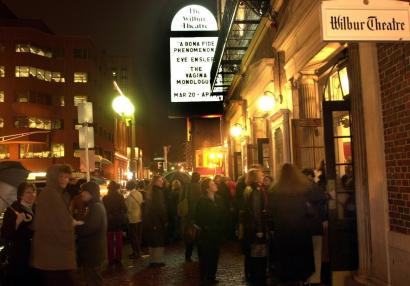
BOSTONIANS seem resigned to seeing the Wilbur Theatre disappear as a performing-arts space. With few shows left to tour the country besides those brought in to the Colonial Theatre and the Opera House, no one is finding much use for the gem on Tremont Street.
It would be a tragedy, though, to let the Wilbur be turned into another restaurant or office space. Not only has the theater been a huge part of Boston's past; it could be equally important to the future of the arts scene here.
In order to keep the Wilbur's legacy alive, the City of Boston should simply buy the 1,200-seat theater that's up for sale and make it a haven for the nonprofit arts community. Well, "simply" is the wrong word; it would be enormously complicated. To make the idea work, there would have to be massive concessions from the union contracts that make the place too expensive for a nonprofit to operate.
A larger question is: How could the Wilbur be run as a nonprofit when the Shubert, across the street, part of the nonprofit Citi Performing Arts Center, is hardly thriving?
The Wilbur, though, is a better theater than the Shubert. It's more intimate, the acoustics are better, and actors love it.
More to the point, aside from giving the Boston Ballet and Boston Lyric Opera a place to perform, the Shubert under Josiah Spaulding Jr. hasn't shown the entrepreneurial spirit that the Wilbur did when Clear Channel was letting William Conner and Tony McLean program the place. There were collaborations with the Royal National Theatre in England; the Abbey Theatre of Ireland; and a great coproduction with the Huntington Theatre Company here, "Observe the Sons of Ulster Marching Towards the Somme."
There's no reason not to keep looking for those kinds of non-Broadway productions. Conner left Boston to become president of the Columbus Association for the Performing Arts in Ohio, where he's importing the Royal Shakespeare Company to both Columbus and New Haven. If Columbus and New Haven can find a place for the RSC, why not Boston?
Also, Conner and McLean forged meaningful alliances with Boston's nonprofit companies, which still need a venue to transfer hits like SpeakEasy Stage Company's "Bat Boy." Admittedly, "Bat Boy" probably couldn't have worked on the Wilbur stage, but there had been talk about turning the downstairs club into a smaller stage, which might have been just right.
Additionally, theaters outside Boston would have a place to show their work. Bring in Barrington Stage Company's magnificent "West Side Story" or Shakespeare & Company's rollicking "Rough Crossing" from this past summer, both from the Berkshires, as well as provide a second home to upcoming productions such as the all-black "American Buffalo" in Wellfleet or some of the dance, music and theater offerings from the Mass. International Festival of the Arts in Holyoke.
So why can't a commercial entity make the Wilbur work?
Part of the reason is that the arts economy took a downturn after 2001. People aren't going out as much, and when they do the collective mood is for big-budget musical entertainment.
It would be a shame, though, to lose the Wilbur because of a mood swing. So turn the Wilbur over to a nonprofit entity run by someone like Conner or McLean, who would program it as a mixed-use space for theater, dance, and music. Bring in great shows from the area and elsewhere while rewarding local arts groups when they have something worthy of extension. Resident companies might find a place there, too. This might involve retooling the Wilbur - the second balcony is not a great place to see a play - but retooling is better than trashing.
Where could the city get the money? Beyond union concessions, there needs to be a revenue stream to pay for and operate the theater, as well as provide guarantees to make transfers feasible. The answer is a restaurant and parking tax, even if localized to the Theater District. Such an idea has always been deflected because the state needs to OK such taxes. Mayor Thomas Menino would have to lobby the Legislature and show why such a tax would be good for everybody.
And it would be. Restaurants and garages, which live off the theaters, would have more customers. Boston would have a livelier arts scene. And we'd keep the Wilbur going.
That's worth a few extra dollars for my hamburger.
Updated On: 11/2/07 at 05:19 PM

Posted: 11/2/07 at 8:06pm
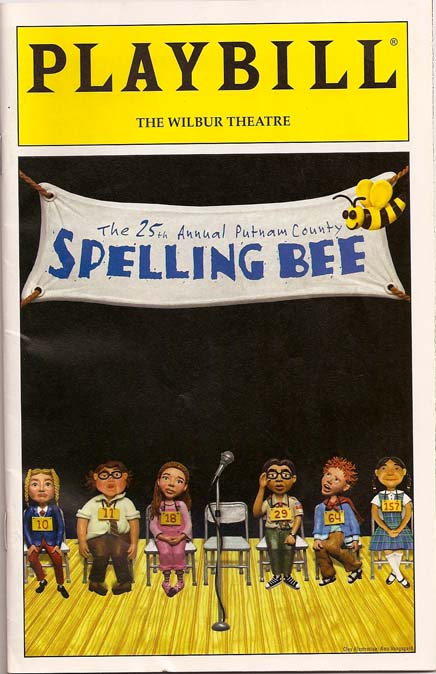
I wonder if they use Playbills at all ? -J*
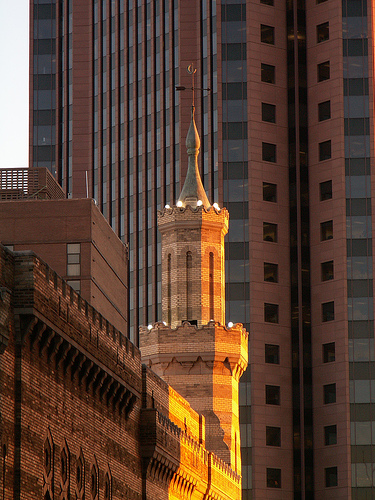
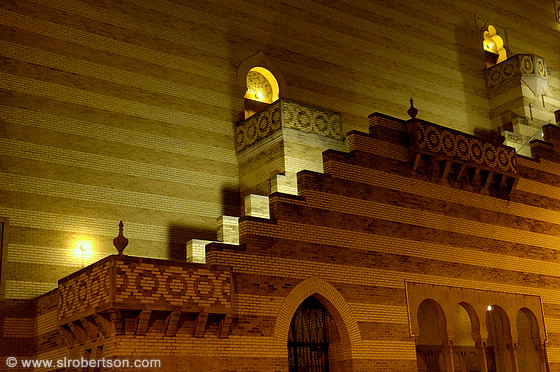
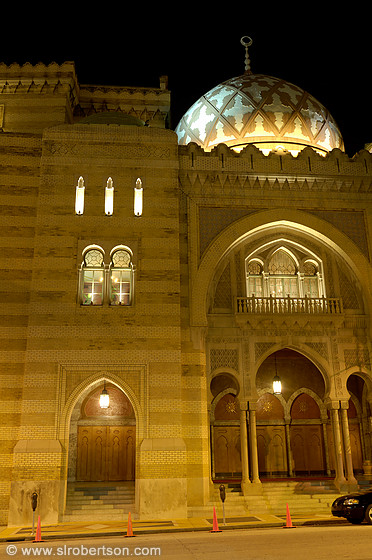
The Fabulous Fox Theater
Atlanta, Georgia
Updated On: 11/2/07 at 08:06 PM
Posted: 11/2/07 at 8:24pm
When I saw the Wang (a/k/a the music Hall) the mirrors on the side walls upstairs which made the theater look even bigger were painted over during the years to cut down on maintenance costs.
The Colonial is georgeous as is the Fox which almost met the wreckers ball in the mid 70's.
BroadwayWorld TV