Can you talk about the Thelma & Louise musical yet?
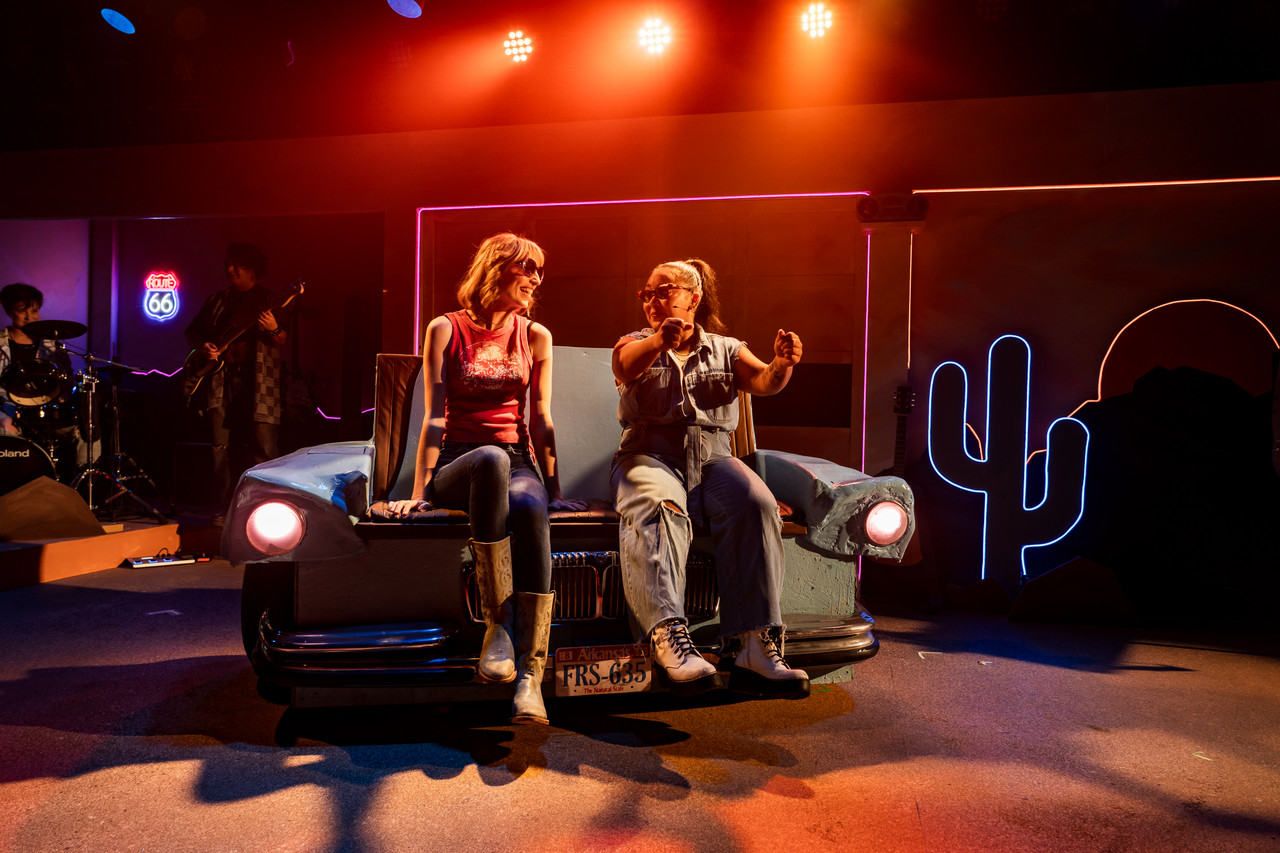
CASE: Well, I've been working on it for almost 10 years. We just did three workshop shows in London, and it went really well. It was the first time we ever got to see it on a stage with staging, lighting, and dancers. It was heavy. I feel it's a very different way to work. It's heavily collaborative, but the collaboration makes it a very sleek hovercraft in this weird way. We change things around all the time, and you can never be married to one thing. Like, man, I always understood and respected and even implemented the theory of killing your darlings, but this is a whole other level.
How does this stage version differ from the film?
CASE: One of the things we really wanted to do in the show was make the men less cartoonish. The men were kind of caricatures of aspects of men; they weren't full men. So we are working hard to make sure that the men in the story are not caricatures and that they're real people, and that they understand their part in what's happening and they realize how much they have to lose and how we all lose with patriarchy. And the women take credit for their part in the stupid dance of the relationships of men and women and, you know, playing hard to get, not telling somebody you're mad, or just those weird avoidance dances and how much time we waste not saying how we feel.
What's your background with musicals?
CASE: When Callie [Khouri, who wrote the original screenplay] called me to do this, I was like, "Callie, I don't know anything about ****ing musicals. I can't even read music." And she was like, "Nope, that's the reason I want you to do it." And I was like, "Okay, but I'll probably need lots of help." So all these years later, I haven't had to bend myself too hard. But if I get fired tomorrow — which I could, you know, and I've always known that since the beginning; this may also never happen, it could never make it to Broadway — it's been a masterclass in songwriting and storytelling.
The only thing about it that makes me really sad is what you're not told: It's not an accessible art form. You cannot do this job unless you are independently wealthy, which I am not. It has been a massive strain on my finances because it's years and years and years and years of not being paid, and having to spend up to a month at a time working on something, which doesn't hurt because you care so much about it.
But I can't stop thinking, "How are people who aren't independently wealthy going to get to tell those stories," you know? I guess there are scholarships and things like that, but why do we just want the same story over and over and over again? I want to know everybody's story, from every perspective. I don't want to just see one version of everything all the time. I want human beings to all have an equal chance. First of all, to just live, and then secondly, to tell their ****ing stories, because stories heal everything. Stories are how humans communicate and how we remember things.



.gif?width=300)