NEW YORK TIMES -
‘Midnight’ and ‘Benjamin Button’: New Musicals Preoccupied With Time
https://www.nytimes.com/2026/10/21/theater/midnight-todrick-hall-benjamin-button-review.html
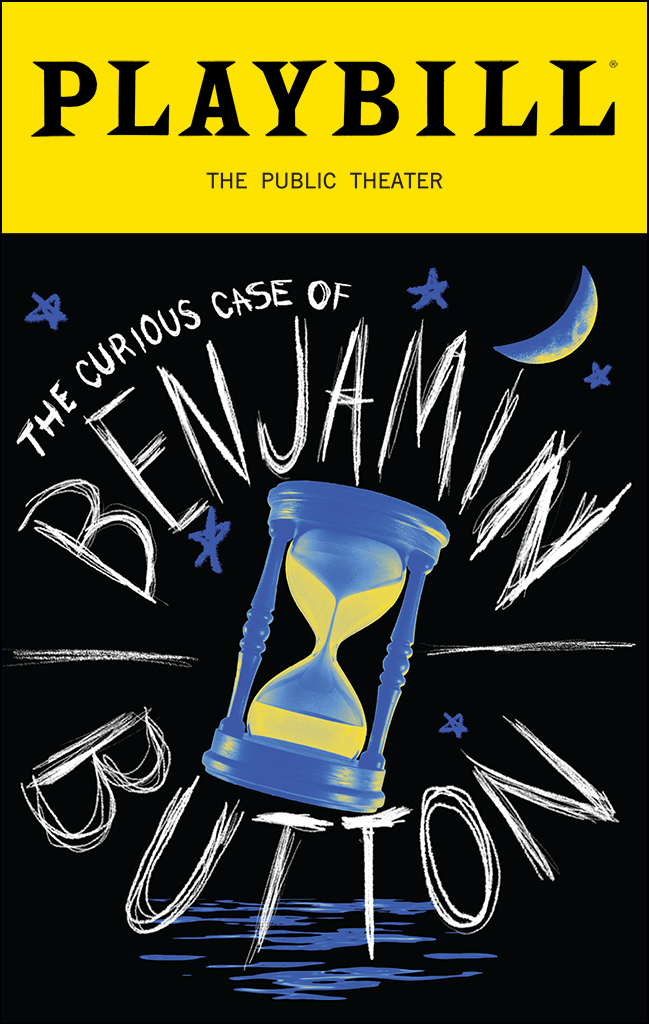
Two curious musical cases have opened in New York this October, two oddly constructed and concept-driven shows. “Midnight” and “The Curious Case of Benjamin Button” are both preoccupied with time and its tragic insistence on running forward — both try, in their way, to correct that. And both falter when they run up against their own internal clocks.
Unfortunately, I don’t think all the time in the world would change “The Curious Case of Benjamin Button” into my kind of show. For one thing, the two hour and 45 minute British production, remade at the Public Theater with a U.S. cast, hits one musical idea — a folksy Celtic reel — and then never veers. This starts out joyfully, but it palls. Man is born as an old guy? Folksy Celtic reel. Man enters World War II? Folksy Celtic reel.
Other artists have taken a crack at F. Scott Fitzgerald’s 1922 short story about a Baltimore man who ages backward, but Jethro Compton, the director and book writer, and his composer-lyricist Darren Clark discard these earlier efforts. In their version, presented as a kind of group storytelling event, Benjamin Button (Andrew Durand) is born in 1918, in a fishing village on the Cornish coast. The spot is conveniently populated with cutesy locals, like a lady who is married to a garden gnome. How quirky! (She, like everyone in Benjamin’s life, is portrayed by a talented instrumentalist, who dances and acts and plays.)
Much of the show operates like over-sanitized children’s theater, though the musical does have two intriguingly adult ideas. The first is that Benjamin is born not just wrinkled but also wise. Hidden away in his father’s attic, baby Benjamin helps his pater fill in his crossword. What other answers might this old-young man know? (Durand, with his patient eyes, indicates some hidden understanding.) The second is the blessing of Benjamin’s death. His mind retreats into playfulness, then a swaddled pre-memory, then into softness, warmth and light. We should all be so lucky.
Unfortunately, there is a lot of strangely inert musical theater between those two moments. Compton sees the story as a romance between Benjamin and a barmaid, Elowen (Kelsee Kimmel), who’s basically the first woman he sees. Yet the vector of Benjamin’s life doesn’t prompt particular insights — not about the 20th century, nor about the human experience, nor about love. The libretto keeps reducing everything of weight, even war, into that same grinning, knees-up, ceilidh cheer.
Appropriately, the best song is reprised at the end; if you enjoyed the show, you can imagine the whole caboodle going around again. “So here’s a toast to makin’ the most, an’ worry not o’ the time we got,” the company sings. I’m not sure that’s the message of the Benjamin Button story, which is about a man who can tell exactly how much time he’s got. But it has the rhythm of encouragement, anyway. And none of us are getting any younger.
Updated On: 10/21/26 at 10:29 PM