There are more pictures of Florence Klotz's beautiful costumes than there are of Boris Aronson's breathtaking set, but if you can get your hands on a coffee-table book called "The Theatre Art of Boris Aronson" (with text by Frank Rich and Lisa Aronson, there are 13 plates in b&w and color dedicated to Night Music.
They include large color photographs and pictures Aronson used in his research, including a photograph of the kind of white birch trees Aronson remembered from growing up in northern Russia:
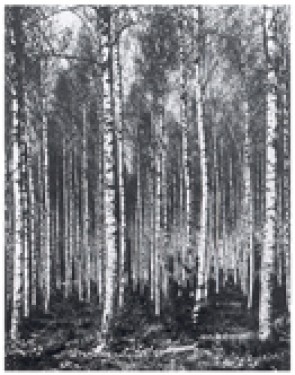
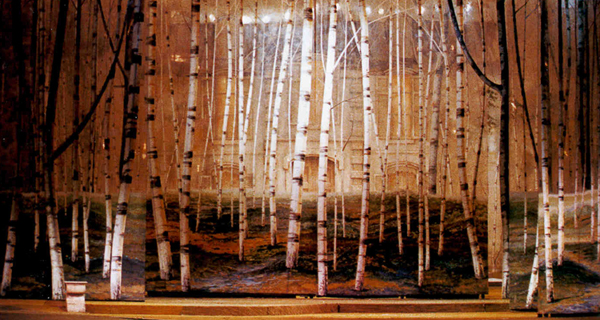
He wanted to make those trees move in a non-literal way, and he found his inspiration in a surrealistic Magritte painting called "Blank Signature" of a woman on horseback seeming to disappear between trees in a forest that inspired the panels of birch trees that moved effortlessly back and forth across the stage, dissolving one scene into the next.

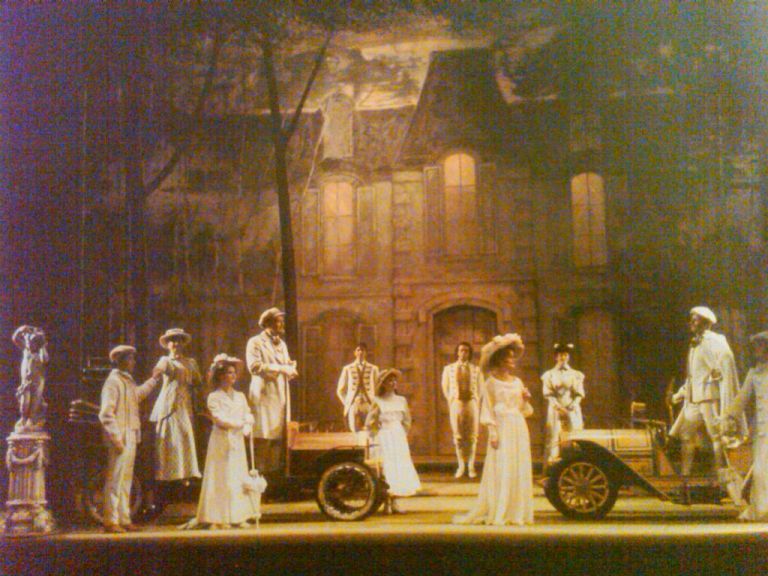
So everything took place amid surrealist white trees. Add to those white trees Klotz's many sumptuous white and beige costumes and the whole world was a white-on-white depiction of the Scandinavian "white nights"...until the dinner party, which exploded in color, especially Desiree's red dress.
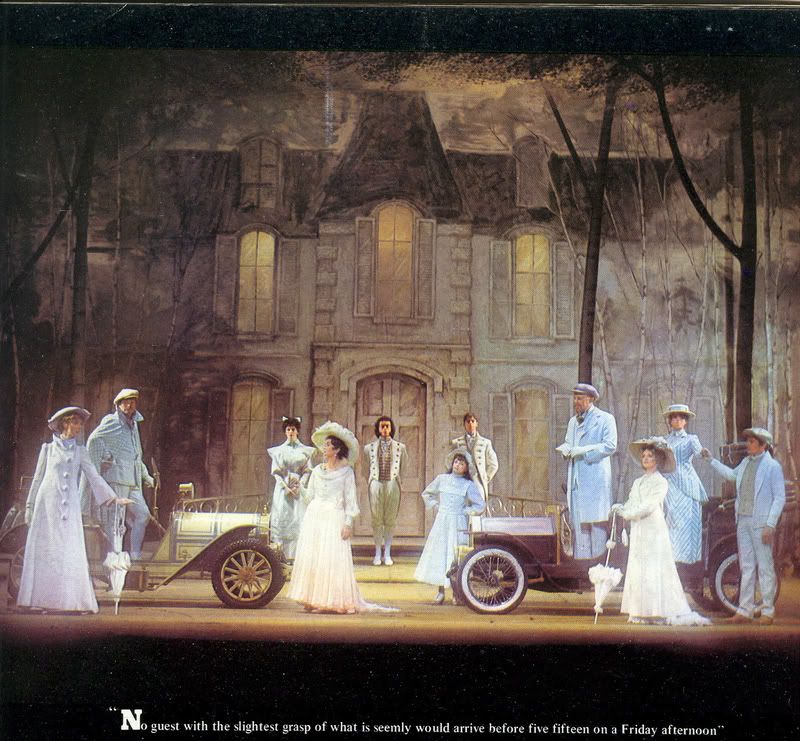
There are three large color panels in the Aronson book that show the magnificence of the physical production: The first shows the two cars arriving in front of Mme. Armfeldt's "family manse" at the beginning of Act Two.
The second shows the woods, with house peeking through.
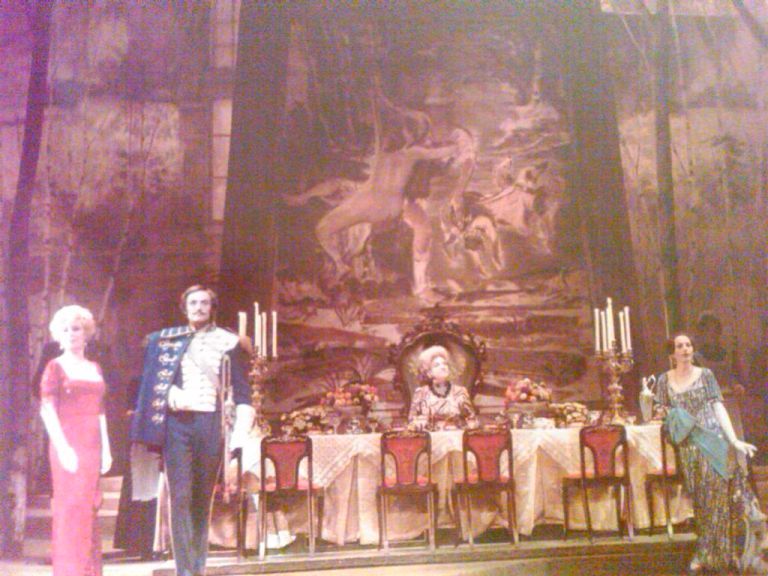
The third shows the dinner party scene. The house was not literal, it was suggested by a long table set among the birch trees, with the backdrop of the exterior of the mansion way upstage. Mme. Armfeldt sat at the center, backed by her "tiny Titian": a huge monumental tapestry, based on themes from Titian, that went from floor to ceiling. It was Aronson's little joke, because he knew that there ARE no "tiny" Titians.
Aronson said that he saw the scene itself "as a Titian, full of dark, rich colors."
Updated On: 1/9/10 at 10:32 PM



.jpg?format=auto&width=300)