Posted: 12/17/21 at 2:36pm
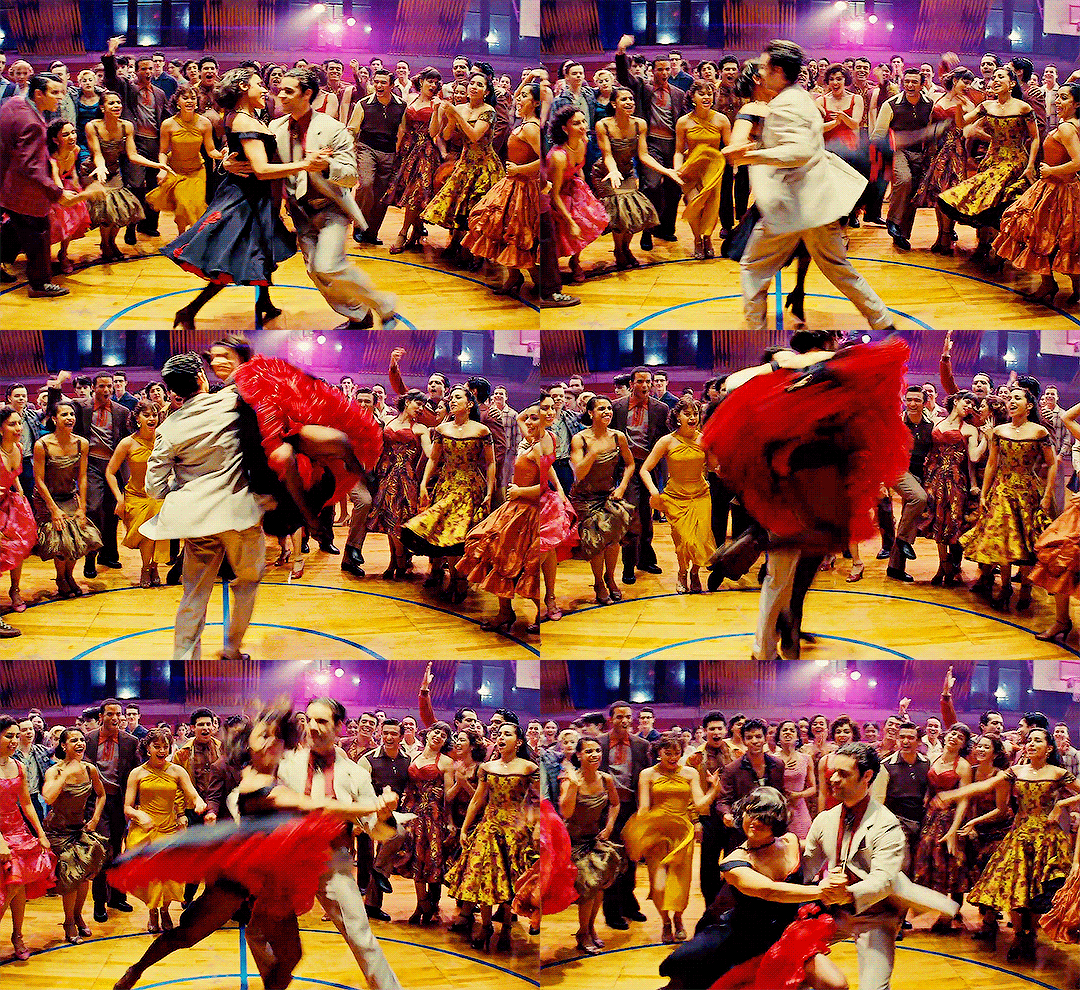
One great thing this new version did is put a spotlight on the long-gone neighborhood of San Juan Hill and has stirred a re-examination of what it means to be a migrant in this country and the systemic racism that still prevails to this day.
I was interested in seeing if Lincoln Center acknowledged its complicated history and was very surprised to find that in June of 2020 it did and has made a commitment to rectify the wrongs of the past:
Today, Lincoln Center for the Performing Arts commits to:
-Telling the story of Lincoln Center from our beginning, in its truth. The displacement of Indigenous, Black, and Latinx families that took place prior to the construction of our campus is abhorrent. We may never know its full impact on those dispossessed of the land on which Lincoln Center sits. But only by acknowledging this history can we begin to confront the racism from which our institution has benefited.
-Presenting artists and points of view that better reflect the City of New York. We will do this, in part, by establishing commissioning funds specifically to center the voices of artists that have been underrepresented on our campus.
-Dismantling structures across Lincoln Center for the Performing Arts that foster inequity and replacing with practices that promote true inclusivity. This includes empowering staff to understand how to identify and constructively address racism within their job functions and department.
We will communicate consistently with you, our community, about how we're holding ourselves accountable in the coming days, months, and years.
Acknowledging the History of San Juan Hill. The 1956 Lincoln Square Development plan that led to the establishment of Lincoln Center was one of many “urban renewal” programs across the country rooted in systemic racism. It displaced a thriving and culturally rich community of more than 7,000 families and 800 businesses, including the largest Black and brown population in New York at the time. We are working with artists, technologists, historians, social justice advocates, and former residents of San Juan Hill to accurately document and understand our origins. As a first step, we are working to make our archives publicly available for research and as a resource for artistic projects.
In the coming months, we will work to bring the story of San Juan Hill to life using augmented reality, meaningfully telling the stories of the generations of families and communities that resided on the 16 acres we now call home. Through an app on your mobile device, you will be able to see these stories happen at various points around campus, peeling back the layers of time and physical space to experience events, people, objects, and buildings that once occupied our campus. We plan to install a permanent placard on-campus that acknowledges this land first belonged to the Indigenous Lenape peoples, ensuring transparency of the complete history of the land on which our institution resides. We also recognized the Lenape during a ceremony at the public launch of Restart Stages, and expect this work to be ongoing.



.png?format=auto&width=365)